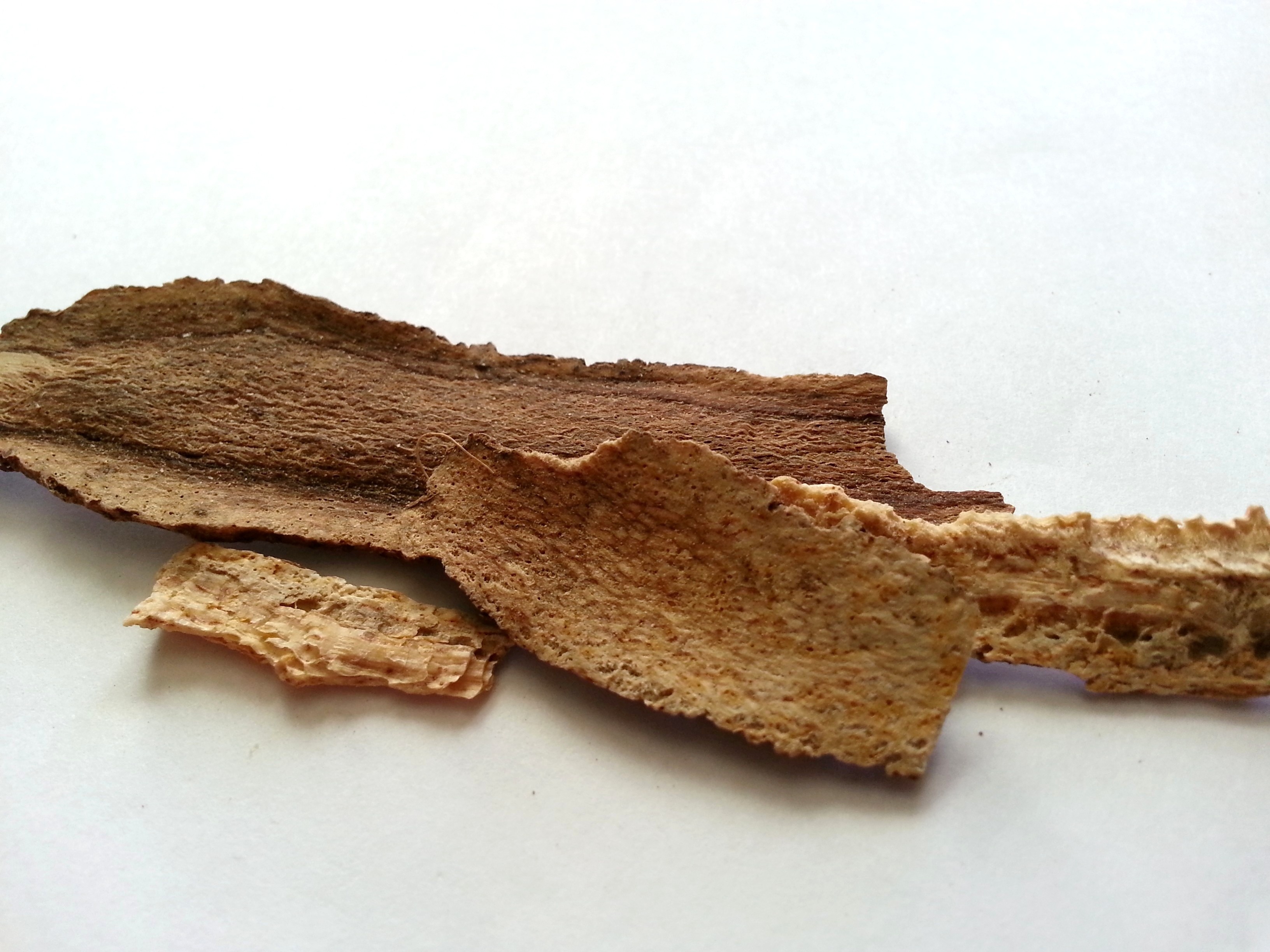
Mu Xiang
Aucklandia Radix
acrid, bitter, warm
PRIMARY FUNCTION:
Regulate Qi
CLASSICAL MANIFESTATIONS:
- Disorders of the gastrointestinal tract
- Poor appetite
- Indigestion
- Pain
- Epigastric
- Abdominal
- Abdominal distention
- Nausea
- Vomiting
- Rib side pain
- Gallbladder
- Diarrhea
- Dysentery
- Tenesmus
Mu Xiang is acrid, bitter, and warm. It enters the large intestine, gallbladder, san jiao, spleen, and stomach systems. It supports liver and gallbladder function and can treat liver overacting on digestion patterns.
Mu Xiang is also used with herbs in the tonification category if they are difficult to digest.
Channels: gallbladder, large intestine, spleen, stomach, san jiao
COMMON APPLICATIONS AND CLINICAL POSSIBILITIES:
- Indigestion
- Abdominal distention
- Biliary congestion
- Angina pain
- Jaundice
- Kidney stones
- Hypertension
Formulas:
- Dang Gui Long Hui Wan
- Fei Er Wan
- Ge Hua Jie Cheng San
- Gui Pi Tang
- Hou Po Wen Zhong Tang
- Jian Pi Wan
- Ju He Wan
- Mu Xiang Bing Lang Wan
- Mu Xiang Liu Qi Yin
- Shao Yao Tang
- Shi Pi Yin
- Si Hai Shu Yu Wan
- Su He Xiang Wan
- Tian Tai Wu Yao San
- Xiang Sha Liu Jun Zi Tang
- Xiang Sha Yang Wei Tang
- Yan Hu Suo Tang
- Zhen Ren Yang Zang Tang
- Zhou Che Wan
- Zi Xue Dan
Contraindications: prescribe Mu Xiang cautiously to patients with deficient heat patterns
Zoo Image: a golfing beaver with a T barbell hat is hitting a qi ball while his intestines are harmonized and a green gold club is at his crotch and there are two liver and spleen balls