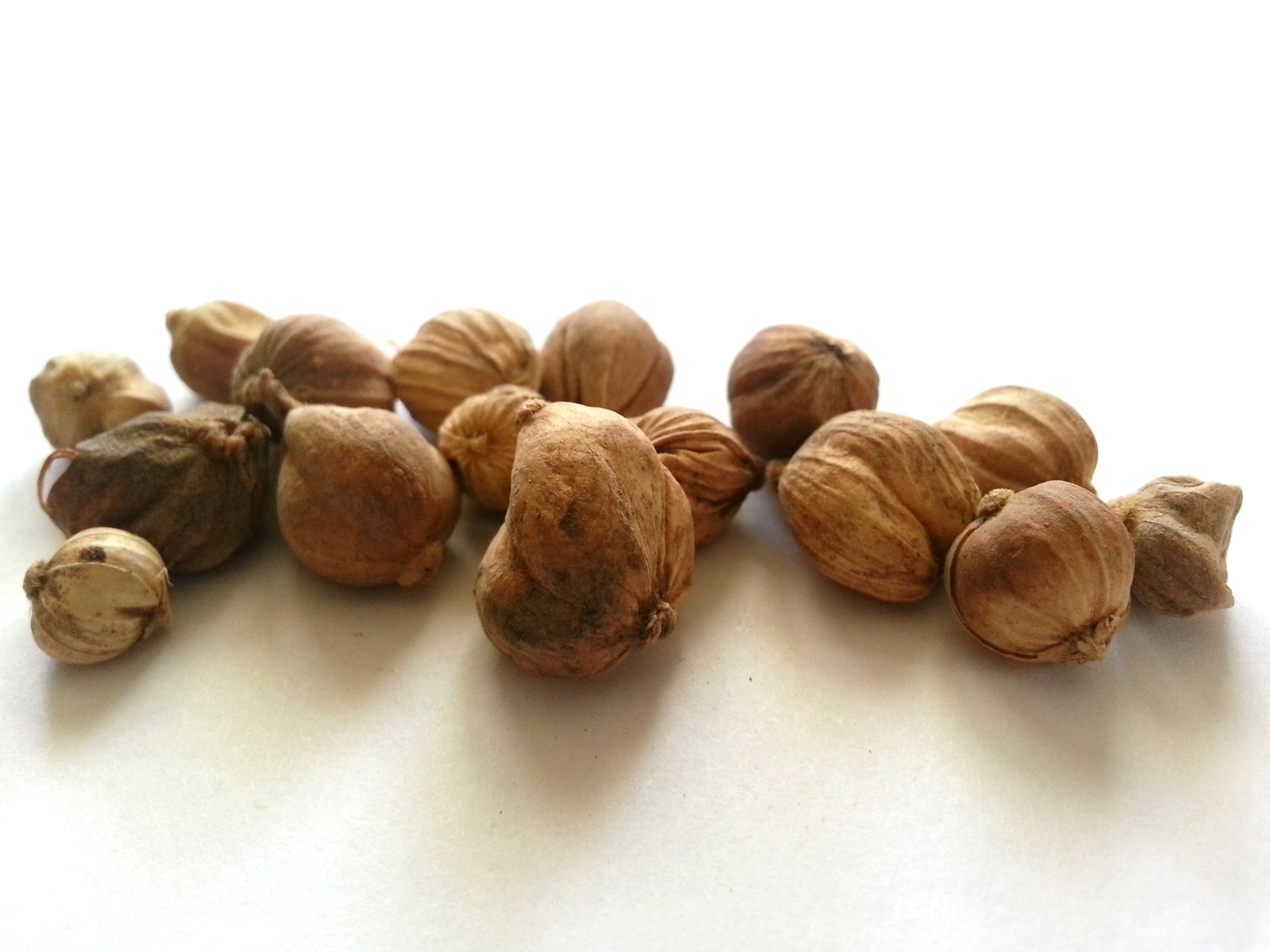
Bai Dou Kou
Amomi Fructus rotundus
acrid, warm, aromatic
PRIMARY FUNCTION:
Aromatic Herb that Transforms Damp
CLASSICAL MANIFESTATIONS:
- Vomiting
- Due to dampness in the middle jiao
- Due to poor spleen and stomach functions
- Epigastric fullness
- Due to dampness
- Indigestion
- Due to poor digestive functions
- Spleen
- Stomach
- Reduced appetite
- Dampness in the middle jiao
- Greasy coating on the tongue
Bai Dou Kou is acrid, aromatic, and warm. It enters the stomach, spleen, and lung systems to break up patterns of damp accumulation especially when there is cold. In Traditional East Asian Medicine, the spleen system involves the digestive system including the pancreas. A failure in digestive function results in unwanted accumulation of dampness and eventually phlegm. The pH of the stomach is very acidic which is considered heat. Poor production of hydrochloric acid results in poor digestive function and cold patterns such as the type that Bai Dou Kou treats. Bai Dou Kou is a branch treatment until the root can be treated to improve the functions of the lung, stomach, and spleen systems which prevents the dampness from accumulating.
This type of cold-dampness can build up in the lung system to cause cough or in the gastrointestinal system to compromise digestive function.
Channels: lung, stomach, spleen
COMMON APPLICATIONS AND CLINICAL POSSIBILITIES:
- Indigestion
- Cold plus dampness obstructing functions of the upper gastrointestinal tract
- Stomach ache
- Dampness irritating mucosal lining
- Abdominal bloating
- Dampness causing fullness in the middle jiao
- Distention
- Accumulation of dampness
- Borborygmus
- Poor stomach functions
- IBS
- Irritation due to poor digestive function and eventual accumulation of dampness
- Fullness in the chest
- Accumulation of dampness in the upper jiao affecting lung system
- Nausea
- Poor digestive function plus dampness
- Vomiting
- Poor digestive function plus dampness
- Fatigue
- Poor spleen functions
- Weight gain
- Dysfunction of splenic system with dampness accumulating
- Weakness of limbs
- Decline of splenic functions that control muscle
- Dysglycemia
- Insulin resistance
- Hyperinsulinemia
Formulas:
- Gan Lu Xiao Du Dan
- Ge Hua Jie Cheng San
- Huo Po Xia Ling Tang
- San Ren Tang
- Xiang Sha Yang Wei Tang
Contraindications: do not prescribe Bai Dou Kou to patients that present with deficiencies of yin or blood
Zoo Image: a skunk angel far from hell with a cold middle shot an arrow through a cloud to a spleen while a stomach tries to lift a qi star