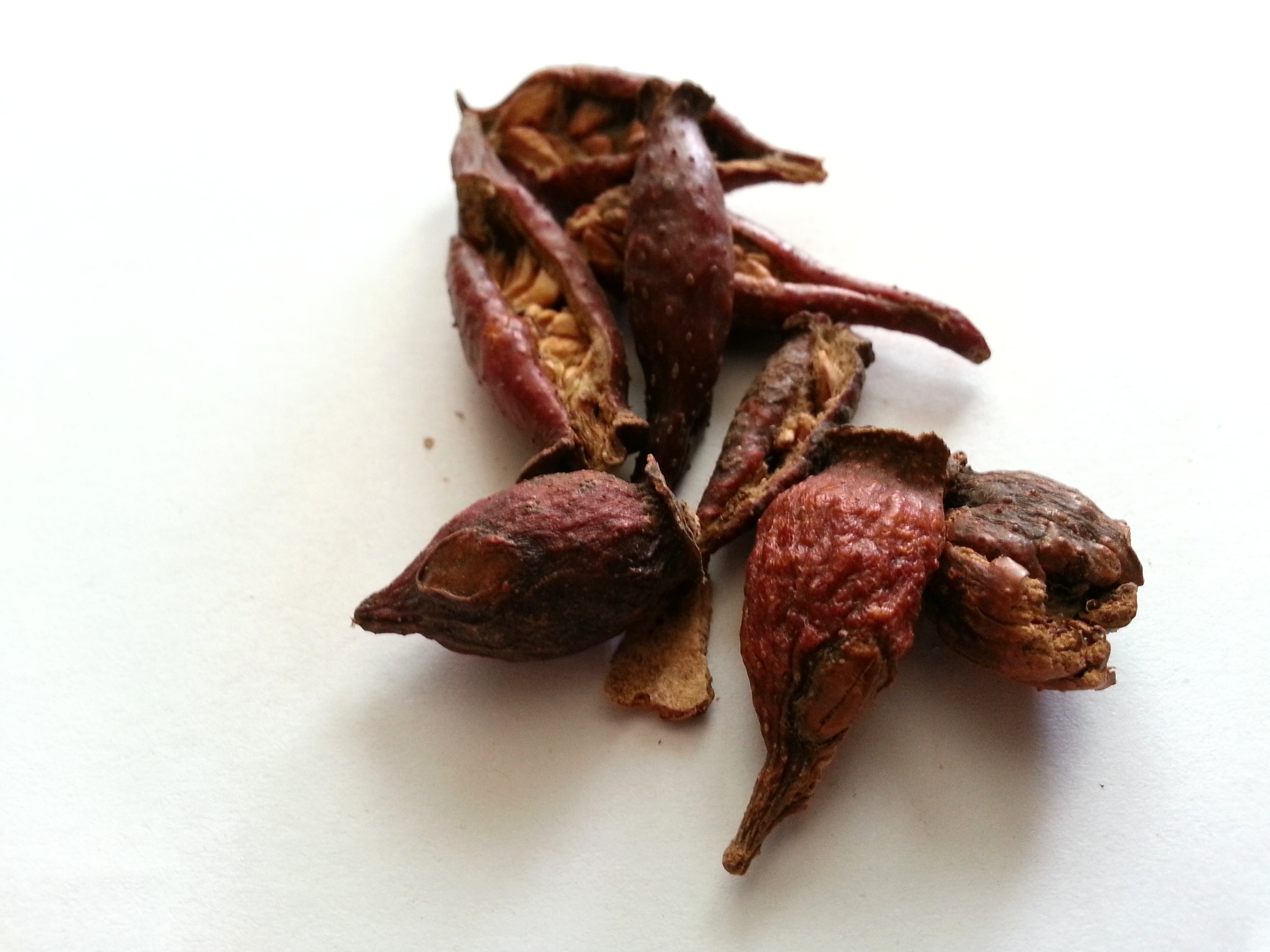
Jin Ying Zi
Rosae Laevigatae Fructus
sour, astringent, neutral
PRIMARY FUNCTION:
Stabilize and Bind
CLASSICAL MANIFESTATIONS:
- Urinary incontinence
- Spermatorrhea
- Vaginal discharge
- Chronic diarrhea
- Dysentery
Jin Ying Zi is sour, astringent, and neutral. It enters the kidney, bladder, and large intestine systems to stabilize and bind. The adrenal glands produce hormones, such as aldosterone, that regulate blood pressure by keeping water in the body. A drop in aldosterone production, from overall decline in adrenal gland function, will result in excess urination. The bladder has both voluntary and involuntary sphincters that require a healthy state of function to keep urine in the body. Jin Ying Zi supports the bladder function and the adrenal gland function in relation to sex hormone production, aldosterone production, and sphincter control in the bladder.
Jin Ying Zi also enters the large intestines to stop diarrhea when the diarrhea is due to decline in function. This decline in function likely involves upper gastrointestinal function (digestion and splenic function) as well as lower gastrointestinal function (assimilation and elimination).
Channels: kidney, bladder, large intestine
COMMON APPLICATIONS AND CLINICAL POSSIBILITIES:
- Prolapsed uterus
- Chronic diarrhea
- Frequent urination
- Atherosclerosis
- Antimicrobial
- Leukorrhea
- Spermatorrhea
- Menorrhagia
- Incontinence
Contraindications: do not prescribe Jin Ying Zi to patients that suffer from excess patterns (especially due to heat patterns), taking this herb in high amounts for too long of period of time will cause abdominal pain even though it is neutral
Zoo Image: a camel wearing a kidney belt is trying to return a mattress that has a face on it made with urine eyes, a semen nose, and a diarrhea smile