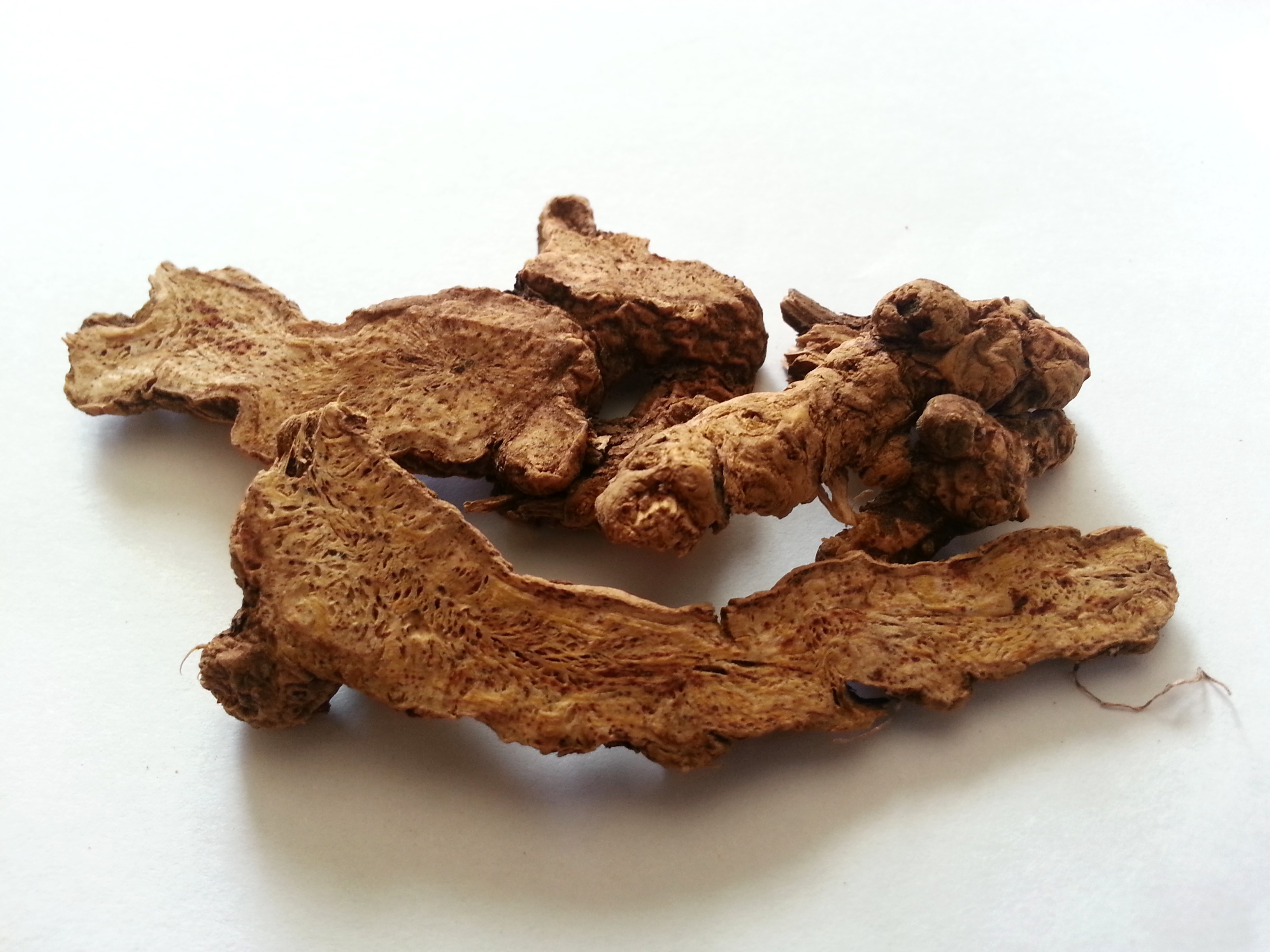
Cang Zhu
Atractylodis Rhizoma
acrid, bitter, warm
PRIMARY FUNCTION:
Aromatic Herb that Transforms Damp
MANIFESTATIONS:
- Fatigue
- Gastrointestinal disorders
- Poor appetite
- Diarrhea
- Epigastric distention
- Nausea
- Vomiting
- Thick greasy tongue coat
- Fever
- Chills
- Nasal congestion
- Pain
- Muscle weakness
- Arthritis
- Body aches
- Headache
- Vaginal discharge
- Dysfunction of the eyes
- Declining vision with dryness
- Night blindness
Cang Zhu is acrid to break up and disperse, bitter to drain and detoxify, and warm to treat cold patterns involving the accumulation of dampness. It enters the spleen and stomach systems.
Cang Zhu can be used for internal dampness affecting the middle jiao but it can also be used for externally contracted patterns of wind cold damp.
Cang Zhu is unique in this category of herbs in that it improves visual function.
Channels: spleen, stomach
COMMON APPLICATIONS AND CLINICAL POSSIBILITIES:
- Dysglycemia
- Diabetic retinopathy
- Gastrointestinal diseases
- Abdominal distention
- Nausea
- Vomiting
- IBS
- Gastritis
- Ulcerative colitis
- Crohn’s
- Edema
- Arthritis
- Low back pain
- Uropenia
- Urodynia
- Vaginal discharge
- Related to intestinal dysbiosis
- Eczema
Formulas:
- Bu Huan Jin Zheng Qi San
- Cang Fu Dao Tan Tang
- Dang Gui Nian Tong Tang
- Er Miao San
- Jiu Wei Qiang Huo Tang
- Mie Di Zhi Tang Tang
- Ping Wei San
- Qi Gong Wan
- Shu Jing Huo Xue Tang
- Si Miao Wan
- Wan Dai Tang
- Wei Ling Tang
- Wu Ji San
- Xiang Sha Yang Wei Tang
- Xiao Feng San
- Yue Ju Wan
Contraindications: do not prescribe Cang Zhu to patients that present with concomitant deficiency heat patterns with excess sweating
Zoo Image: a skunk with no eyes wearing a dry head band is lifting T weights with arthritis in the leg while a blue bee buzzes around